1926 - 2026: A detailed Report about the first Automatic Wristwatch.pdf (476,1 KB)
Proficiat met het jubileum!
Wat heeft er uiteindelijk toe geleid dat de kroon weer terug kwam?
1 like
Om hem op te winden ?
Van USP terug naar bewezen techniek 
1 like
Hier een uitgebreider stuk, ook vandaag gepubliceerd. Ik mis alleen een heel interessant stuk geschiedenis, over Blancpain, dat vrijwel tegelijkertijd (net na Fortis, dat al deze PR voor vandaag aanjaagt) een intensieve samenwerking met Harwood aanging en wat uiteindelijk leidde tot het voortbestaan van Blancpain…
The first Harwood watch was officially presented in 1926 at the Basel Trade Fair. According to another source, even Blancpain made them under license in 1928 for sale in France and the Perpetual Self-Winding Watch Company manufactured them for sale in North America. Unfortunately, Harwood’s dream didn‘t last long. The first watches were released in 1928, shortly before the economic crisis hit the market in late 1929. After the New York Stock Exchange collapsed, The Harwood Watch Company lost its sponsor and the company never recovered.
In 1926, under the leadership of the Blancpain family, the company collaborated with John Harwood, the British inventor who designed and patented the world’s first automatic wristwatch movement.
Ze wilden echter ook tanks maken met een automaat:
The result of the collaboration was a series of Blancpain watches called self-winding Rolls, based on Harwood’s patent. These were rectangular-shaped watches with a protective dial drawer.
In 1926, the Manufacture entered into a partnership with John Harwood, a British watchmaker who had developed the first self-winding wristwatch (till then automatic winding systems only existed in pocket watches) obtaining a Swiss patent in 1924.
The new design placed a thick winding rotor off the end of the movement, allowing it to move back and forth in its channel over a 180 degree arc. To fight dust or water, the crown was removed and the watch featured a system for setting the time by rotating the bezel.

The Harwood automatic watch based on Blancpain movements featuring the automatic winding systems invented by the British watchmaker
Unfortunately this type of automatic movement equipped with Harwood’s rotor was not feasible to be housed in small ladies’ watches. For this reason, Frédéric-Emile collaborated with the French watchmaker Leon Hatot to develop a different form of winding system which brought to the launch of the rectangular “Rolls”, which became the world’s first ladies’ automatic watch.
Here the ingenious solution was to place the entire movement into a carriage that would allow it to slide back and forth, thereby recharging the mainspring. To facilitate the sliding, the watch was fitted with ball bearings between the movement and its carriage - hence the name of the new watch, the “Rolls”.
On the sudden death of Frédéric-Emile Blancpain in 1932, his only daughter, Berthe-Nellie, did not wish to go into watchmaking. The following year, the two members of the staff who had been closest to Frédéric-Emile, Betty Fiechter and the sales director André Léalof my heart that I see the conclusion for me of the period that links me to all the memories of my childhood and youth. The end of Villeret for Papa brings real sadness, but I can assure you that the only solution which can truly ease my sadness is your taking over of the manufacture together with Mr Leal. Thanks to this fortunate solution I can see that the traditions of our precious past will he followed and respected in every way.*
You were for Papa a rare and dear collaborator. One more time let me thank you for your great and lasting tenderness which I embrace and carry with me in my heart.
Best to you,
Nellie"
As there was no longer any member of the Blancpain family in control of the firm, the two associates were obliged by a Swiss law of the time to change the company name.
The firm would be called “Rayville S.A., successeur de Blancpain”, “Rayville” being a phonetic anagram of Villeret. Despite this change of name, the identity of the Manufacture was perpetuated, and the characteristics of the brand were preserved.
With Betty Fiechter as the director, Blancpain had to face the effect of the Great Depression of the 1930s. One of the countermeasures was the opening to movement supply to other brands. In this period, Blancpain became a supplier of Gruen, Elgin and Hamilton, among the others.
2 likes
Fortis was de eerste in 1926, dat is de reden voor het feestje vanuit Fortis vandaag! Daarna volgden er zeker meer!
Ik vind dat de pioniers van het automatische uurwerk ook nog niet vergeten mogen worden
1 like
Interessant stuk inderdaad! Een must-read voor iedere horlogeliefhebber.
Eigenlijk zet dit alles meer in perspectief. Dat Fortis ermee te koop loopt is hun goed recht, maar hun rol was in eerste instantie louter een aanvulling op een gepatenteerde oplossing. Serieproductie van de automaat was de nieuwswaarde die Fortis toevoegde. Niet de automaat zelf.
Leuk dat in dat artikel Glycine genoemd wordt. Hier had ik daar al iets over geschreven;
1 like
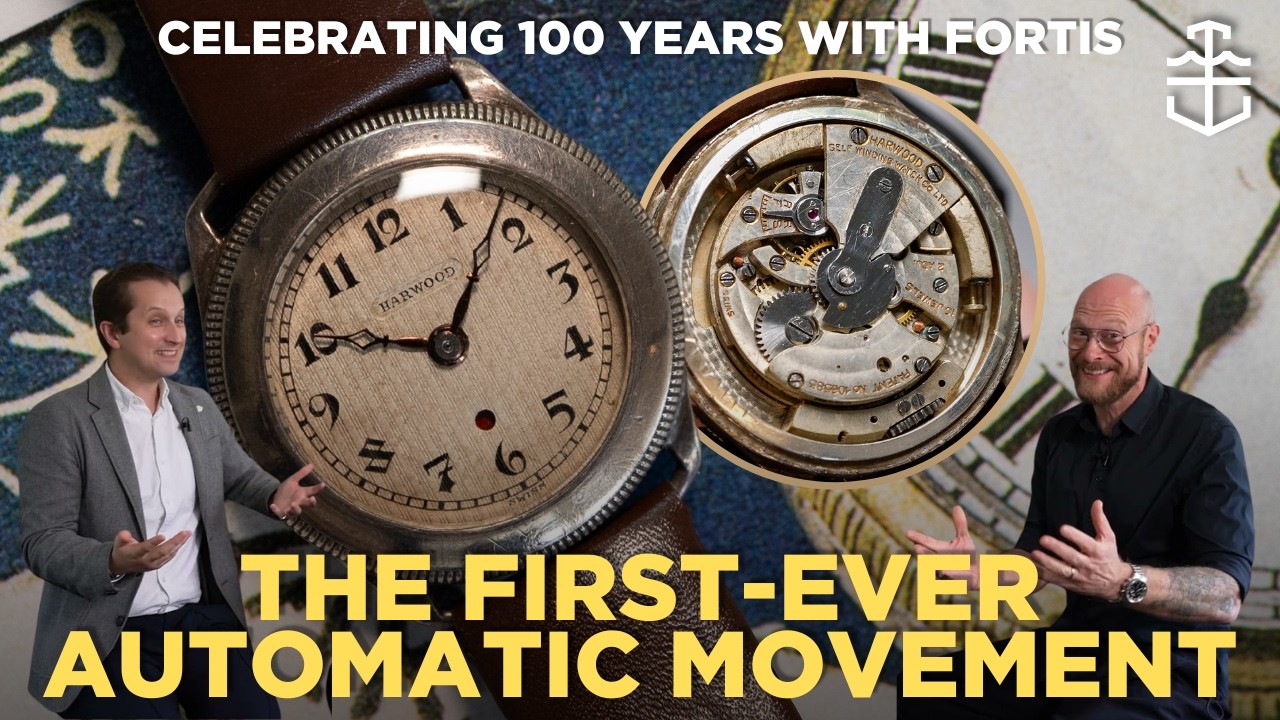
Om de tijd te zetten. Of de datum. Of om op te winden. Tja. Wat doe je met de kroon?
Ik denk dat het de meest goedkope en robuuste oplossing is. Hij is nog gebruiksvriendelijk ook. Soms moet je dingen die niet stuk zijn niet willen veranderen.
1 like
Dat snap ik, maar eerst adverteren ze ermee dat het horloge geen kroon heeft, als eerste horlogemerk, om vervolgens stilletjes er toch weer op terug te vallen.
Interessant wel…
1 like
Het was toen een innovatie. Draaibare bezel voor uitsluitend de tijd goed te zetten is redelijk complex en heeft meer onderhoud nodig zou ik me kunnen bedenken. Het belangrijkste was het automatische uurwerk. Nu heeft de kroon nog steeds alle voordelen en daar is de ontwikkeling ook niet gestopt. Fortis heeft met de B-24 ook als 1 van de eerste een kroon ontwikkeld, niet verschroefd welke 20ATM behield. De “many firsts” kunnen soms ook daarin “saai”worden. Zoals Fortis met het eerste “plastic” horloge kwam. Ermee gestopt, Swatch heeft dat later overgenomen en groot mee geworden.
Wat dan wel weer een blijvend boeiende ontwikkeling is: Fortis kwam met de allereerste Automatische Chronograaf met mechanisch alarm. Vanaf 2019 is alles wel weer verschroefd bij Fortis.
1 like
Komt Fortis nog met een jubileummodel om deze te 100 jaar te vieren?
Neen.
In oktober komen nog wel nieuwe releases, maar staat los van dit jubileum.
De kroon achterwege laten loste 100 jaar geleden het probleem op van indringend stof en vocht. Daar kwam later een betere oplossing voor, met rubber thv stift en kast, noem het een kroonopvolger 
Kleine nuance. Fortis maakte met de Flipper niet het eerste horloge met een plastic kast, wel het eerste Zwitserse met kunststof horlogekast, met Eta automaat nota bene en geschikt om te duiken.
Voor 1900 waren er al horlogekasten van celluloid, met name in Frankrijk werd daar toen al flink wat gefabriceerd. In de jaren 50 en 60 ontstonden er meer experimentele “plastic” horloges. Maar niet te vergelijken met de harde kunststoffen zoals we ze vanaf de Flipper zagen.
1 like
Bedankt voor de aanvullende info!
1 like